
The 3% inflation target theory resonates with the interest rate hedge for millions, as the Federal Reserve's tightening path faces backlash from the growth side
The Federal Reserve's current policy is at a delicate crossroads: on one hand, officials are collectively releasing hawkish signals, and a 25bp rate hike in December has almost become the market's benchmark expectation; on the other hand, leading institutions are publicly questioning the rationality of the 2% inflation target, and the US Treasury options market is simultaneously seeing millions of hedging positions against rate cuts. ACE Markets, after cross-validating institutional views, options fund flows, policy statements, and the financing costs of the real economy, believes that Ackman's proposal to "raise the inflation target to 3%" is not an isolated personal judgment, but a concentrated manifestation of the market's escalating concerns about "excessive tightening leading to a recession"—the calls from the opinion side and the bets from the funding side corroborate each other, indicating that the growth costs of this round of tightening are being repriced. Focusing solely on linear analysis of the magnitude of a single rate hike easily misses the cumulative signals of tail risks.
Concerns about excessive tightening have moved from theoretical discussions to actual monetary policy.
Two documents, from different perspectives, point to the same conclusion: market concerns about over-tightening are rapidly escalating. One side features public warnings from hedge funds, while the other shows substantial investments in the derivatives market, forming a complete logical loop. ACE Markets believes that the public calls from leading institutions and the massive hedging in the derivatives market are no coincidence. Both point to the same judgment: the growth side effects of the Fed's continued interest rate hikes are moving from expectation to reality, and the market has begun to prepare for the tail-end scenario of "over-tightening → economic downturn → policy reversal."
From an institutional perspective, Pershing Square founder Ackman's core judgment is supported by two layers. The first is that the financial environment has tightened substantially: high interest rates coupled with a sell-off in tech stocks have significantly increased corporate financing costs. For example, SpaceX, with its investment-grade debt, has seen its latest secured debt financing rate reach 8.259%, far exceeding the less than 6% level of its unsecured debt at the time of its IPO. Equity financing costs have also risen with falling stock prices, and the continued adjustment in the AI sector has further worsened corporate financing conditions. If the Federal Reserve continues to raise interest rates solely based on inflation data, it will further squeeze corporate investment intentions, ultimately harming economic growth. The second layer is the rise in the structural inflation center: geopolitical risks, global military spending expansion, anti-globalization and tariffs, and massive capital expenditures on AI and energy infrastructure are systematically increasing production and capital costs, making it increasingly difficult to achieve the 2% inflation target through moderate means; 3% is a more suitable long-term target for the new environment.
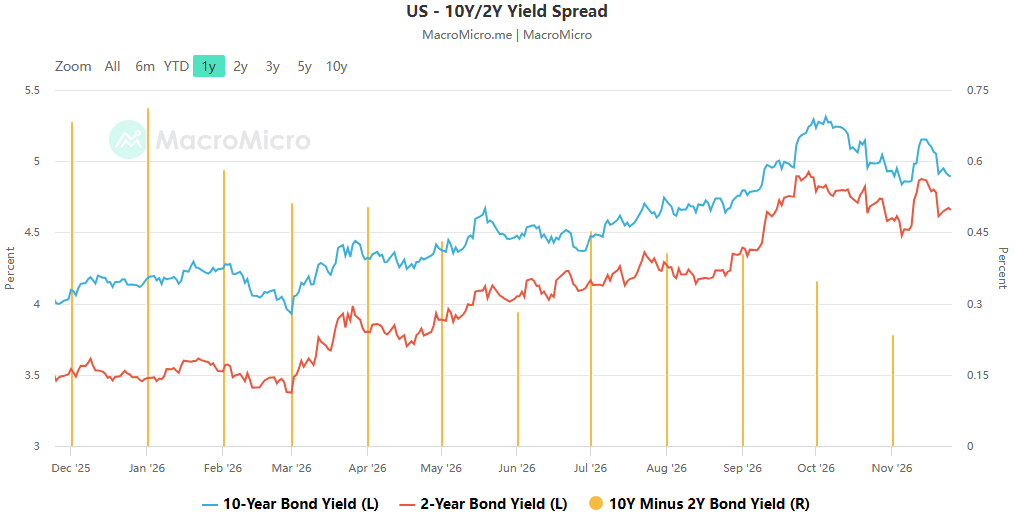
From a funding perspective, changes in the open interest of US Treasury options precisely validate these concerns. Over the past week, open interest in SOFR-linked medium-term interest rate call options (betting on a decline in interest rates) increased by approximately 1.3 million contracts, nearly six times the increase in put options; some positions are directly betting that policy rates will fall to around 3% in early 2028. Simultaneously, in 10-year US Treasury futures options, the premium for call options (betting on rising bond prices and falling yields) has exceeded that of put options, indicating that investors are willing to pay higher hedging costs for the "declining yields" scenario. The 10-year US Treasury yield has fallen from a high of 5.3% in early October to around 4.9%, also echoing safe-haven buying driven by growth concerns.
Fiscal policy and market warnings are in sync, but the Federal Reserve remains focused on combating inflation.
Amid warnings of excessive tightening, a subtle divergence in policy stances has emerged, a point that can be confirmed by cross-referencing information from two sources. The fiscal authorities have adopted a more cautious approach. US Treasury Secretary Bessant publicly stated that US financial conditions have tightened significantly in recent months, and the market is generally concerned that excessive tightening could lead to policy mistakes. Although he did not directly call for the Federal Reserve to pause interest rate hikes, his statement itself conveyed the administration's concern about the costs of growth, echoing Ackman's warnings at the policy level.
However, the prevailing stance within the Federal Reserve remains focused on combating inflation, a view corroborated by statements from several officials:
Federal Reserve Governor Cook made it clear that the current interest rate level is insufficient to control high inflation, and there is no room for patience to continue waiting. Acting too late will only result in greater tightening costs in the future.
Hawkish officials such as Waller and Hamak are still discussing more aggressive tightening options, including the possibility of a single 50-basis-point rate hike;
New York Fed President Williams also emphasized that inflation remains significantly above the 2% target and that continued action is needed, but he prefers a more gradual approach.
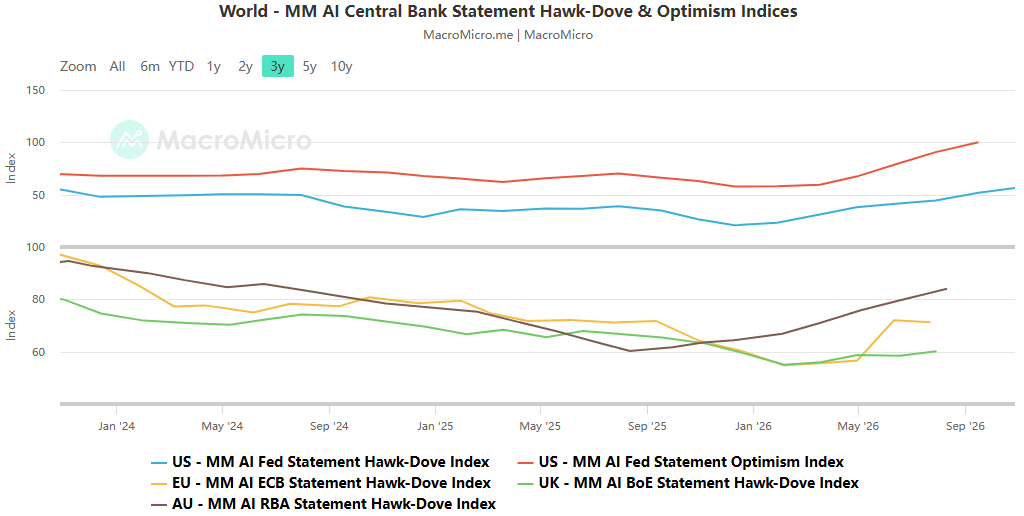
The market's benchmark expectations have not fundamentally shifted: traders generally anticipate a 25 basis point rate hike at the December meeting, with a cumulative hike of approximately 75 basis points by mid-2027, bringing the policy rate to around 4.5%. Institutions such as Bank of America and JPMorgan Chase are still recommending yield curve flattening trades. However, the surge in hedging positions in the options market indicates that the market is buying insurance against a low-probability "tightening overshoot" scenario—a marginal change that most analyses focusing solely on mainstream expectations tend to overlook.
Under structural inflation, the dilemma of balancing policy credibility and growth costs.
The debate over the 2% versus 3% inflation target is essentially a disagreement about whether the central inflation level has structurally risen. This resonates across cycles with the energy and supply chain logic we have been consistently validating. Factors such as geopolitical risks, deglobalization, and investment in AI and energy infrastructure, as proposed by Ackman, are not short-term disturbances. From the energy perspective, soaring global crude oil transportation costs and persistent refinery capacity constraints make it difficult for end-energy prices to return to pre-pandemic lows. From the demand side, the continued construction of AI infrastructure is driving capital expenditure, providing medium- to long-term demand support. These factors collectively push up the medium- to long-term inflation level. Forcibly suppressing inflation back to 2% through aggressive interest rate hikes would inevitably come at the cost of a deep economic recession.
However, ACE Markets also cautions that raising the inflation target is not a costless option. For the Federal Reserve, which has long pledged price stability, adjusting the target before inflation is under control would directly damage policy credibility, increase long-term inflation expectations among residents and businesses, and ultimately require more drastic tightening to stabilize prices. This is the core bottom line of the Fed's continued adherence to the 2% target—the essence of target adjustment is a trade-off between short-term growth costs and long-term policy credibility, not a simple numerical change.
Scenario simulation and core tracking indicators
Based on cross-validation from three dimensions—viewpoints, funding, and policy—we present three scenarios for judgment:
Baseline Scenario: A 25 basis point rate hike in December, followed by a gradual tightening pace, with inflation slowly declining, the economy achieving a soft landing, interest rates remaining high for longer than market expectations, US Treasury yields remaining high and fluctuating, and the yield curve flattening slightly.
Overshooting risk scenario: The Federal Reserve continues to raise interest rates beyond expectations, coupled with a cooling of AI investment and a widening of corporate credit spreads, the downward pressure on the economy will quickly emerge, ultimately forcing it to turn to interest rate cuts ahead of schedule. Long-term yields will fall ahead of schedule, and the yield curve will shift from flat to steepening and repairing itself.
Optimistic mitigation scenario: Core inflation falls more than expected, the Federal Reserve signals a pause in tightening, market risk appetite recovers, tail-end hedging positions are gradually closed, and equities and bonds simultaneously enter a recovery window.
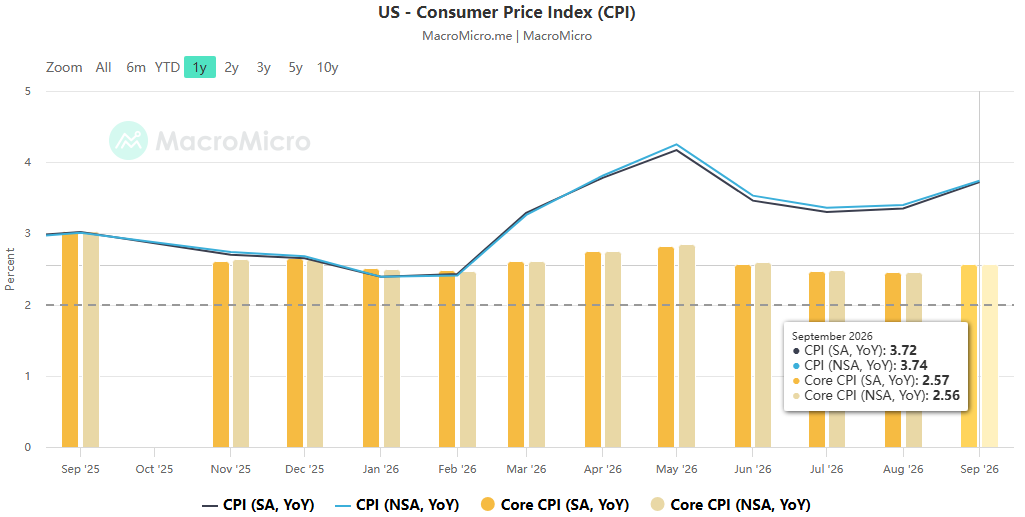
Going forward, we recommend focusing on tracking four interrelated signals: the month-on-month trend of core inflation and the slope of the housing component, corporate credit spreads and financing availability, marginal changes in the structure of US Treasury option positions, and changes in the Fed officials' focus on risks to the growth side.
Summarize
The core contradiction of this tightening cycle has gradually shifted from "how high is inflation and how many times interest rates need to be raised" to "what are the growth costs of raising interest rates and when will it trigger a policy reversal?" An analytical framework that solely focuses on inflation data or single meeting decisions is no longer sufficient to fully capture the current market pricing logic. ACE Markets consistently adheres to a multi-dimensional cross-validation approach, combining "institutional views, capital behavior, policy stance, and real costs," enabling it to identify marginal changes from baseline expectations to tail risks earlier and grasp the main asset pricing themes in the latter half of the tightening cycle.
The content of this article is spontaneously contributed by Internet users, and the views expressed in this article only represent the author himself. This website only provides information storage space services, does not own ownership, and does not assume relevant legal responsibilities.https://www.aneimedzi.cn/html/576.html