
Why is it easy to "crash" after a period of continuous profits? A complete analysis of the psychological traps in precious metals trading
In CFD trading of precious metals such as gold and silver, a repeatedly verified fact holds true: the root cause of most traders' losses is often not a lack of understanding of candlestick charts, but rather a lack of self-control. Every fluctuation in market price is a collective projection of the fear, greed, anxiety, and wishful thinking of countless traders. Understanding the workings of trading psychology is one of the fundamental skills for long-term survival in the precious metals market.
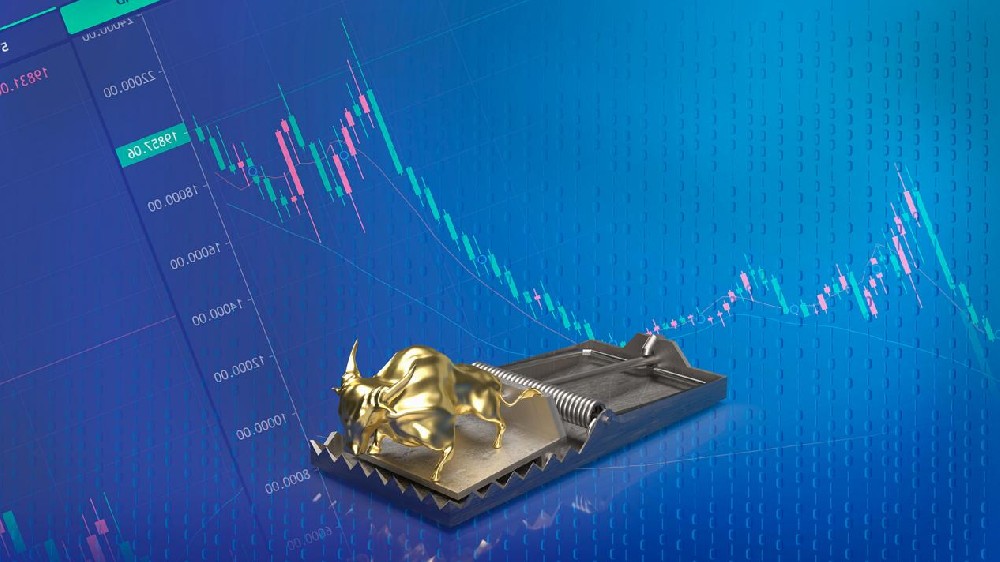
I. Loss Aversion and Disposition Effect: Why "Don't Cut Losses When You Should"
Behavioral finance research shows that the pain of loss is about twice as much as the pleasure of gaining the same amount. This means that when a position incurs a floating loss, the trader's brain instinctively resists the fact of "accepting the loss"—unwilling to accept that the loss has occurred, always thinking, "Let's wait and see if it goes back up." This psychological bias is called loss aversion.
Alongside loss aversion comes the disposition effect—investors tend to prematurely close profitable positions to prevent prices from falling back to their original level; while when faced with losing positions, they tend to hold on, waiting for prices to rebound. The common result of these two psychological biases is: cut profits and let losses run—exactly the opposite of the correct principle in trading: "cut losses and let profits run."
This phenomenon is particularly pronounced in the precious metals market. Gold and silver prices are influenced by multiple factors, including geopolitics, the dollar's performance, and inflation expectations, resulting in frequent fluctuations. When prices experience short-term pullbacks, many traders choose to hold onto losing positions because they are unwilling to admit their misjudgment, causing small losses to turn into large ones.
II. Overconfidence: The "Cognitive Trap" After Consecutive Profits
A string of profits can give traders the illusion of "market control." Fueled by this overconfidence, traders may shift from cautious, small trades to large, leveraged bets, ignoring the risks of market volatility. When the market reverses, a single loss can wipe out all those profits.
The high leverage inherent in the precious metals market amplifies the destructive power of overconfidence. With a leverage ratio of 1:500, profits accelerate when the directional prediction is correct, and losses accelerate equally when the directional prediction is incorrect. Overconfident traders often underestimate the probability of low-probability events—and the precious metals market is precisely where "black swan" events frequently occur.
III. Herding Effect and FOMO: When "Everyone is buying" becomes the reason for buying.
Humans are social animals; avoiding human interaction is not in our nature. In the precious metals market, this instinct manifests as the herd mentality—when gold prices surge due to news, many traders blindly follow suit, buying without considering valuation or technical patterns. The result is often a collective buying at the peak, becoming the "bagholders" during subsequent pullbacks.
The essence of "buying high and not buying low" is herd mentality and trend-following behavior. When investors see prices rising, they believe that the price will continue to rise, especially when they see others around them making profits, and they are afraid of "missing out" so they follow the trend and buy in; when prices fall, they are afraid of further declines and dare not enter the market, or even leave the market at a loss.
Closely related to the herding effect is FOMO (fear of missing out). When gold prices rise rapidly, FOMO creates intense anxiety that "if I don't enter the market immediately, I'll miss out on the entire trend." Trading decisions made under this state often lack sufficient analytical basis.
IV. Anchoring Effect: How Price Memory Interferes with Judgment
The anchoring effect refers to the tendency for people to rely excessively on the first piece of information they encounter when making judgments (i.e., the "anchor"). In precious metals trading, this manifests as traders using a historical price as a benchmark—for example, "Gold previously reached $2,000, and now $1,900 is cheap"—while ignoring changes in the current market fundamentals.
The endowment effect is the other side of the anchoring effect—traders tend to overestimate the value of their positions. When holding long positions, they "always feel the price will rise," and when holding short positions, they "always feel the price will fall." This psychological bias makes it difficult for traders to objectively assess the risk of their positions.

V. The Auxiliary Role of Platform Tools in Psychological Game Theory
Understanding the existence of psychological biases is the first step in overcoming them. Furthermore, the functional design of trading platforms can, to some extent, help traders reduce the interference of emotions in their decision-making.
ACE Markets provides precious metals traders with a suite of actionable tools by integrating with the MetaTrader 5 (MT5) trading system. The MT5 platform allows setting stop-loss and take-profit orders when opening a position—once set and activated, these orders are no longer controlled by emotions, and the system automatically closes the position when the gold price hits the stop-loss level, fundamentally preventing the psychological procrastination of "waiting a little longer".
The platform also offers a trailing stop-loss function—the stop-loss price automatically moves up as the price rises, protecting existing profits while allowing them to continue to grow. For traders who wish to further refine their exit strategies, the OCO combo order (either-choose-one-cancel order) allows setting two mutually exclusive orders: a take-profit order and a stop-loss order. Regardless of which direction the price breaks out, the system will automatically execute the corresponding closing order.
ACE Markets supports Expert Advisor (EA) trading. Automating trading strategies allows traders to mitigate emotional interference and execute proven trading logic. Furthermore, the platform's one-click trading feature helps traders make decisions more promptly during periods of rapid price volatility, reducing missed opportunities due to hesitation.
VI. Some Psychological Management Suggestions for Precious Metals Traders
Regardless of the platform used, the following points can help traders remain rational in psychological games:
Pre-set stop-loss and strictly execute it: Determine the maximum acceptable loss amount before opening a position and set the stop-loss order as a conditional order to avoid canceling or moving the stop-loss due to emotions when prices fluctuate.
2%–5% of the total account capital . A position calculator can help transform the abstract concept of "risk awareness" into concrete numerical constraints.
Regularly review your trading records: Look back at each of your trades and count how many decisions were made based on emotions rather than strategy. Identifying your own psychological biases is the first step to improvement.
Avoid making decisions under extreme market conditions: When the market is fluctuating wildly, it is often wiser to pause trading and observe calmly than to rush into the market.
Conclusion
Precious metals trading is essentially a continuous psychological game. Behind price fluctuations lies the collective projection of cognitive biases from countless traders. Understanding psychological mechanisms such as loss aversion, overconfidence, and herding behavior, and utilizing tools provided by the platform, such as stop-loss and take-profit orders, trailing stop-loss orders, and Expert Advisor (EA) automation, can help traders maintain a clearer sense of direction in this game. Ultimately, the long-term outcome of trading depends on understanding market patterns, recognizing one's own psychology, and the steadfastness in adhering to trading discipline.
The content of this article is spontaneously contributed by Internet users, and the views expressed in this article only represent the author himself. This website only provides information storage space services, does not own ownership, and does not assume relevant legal responsibilities.https://www.aneimedzi.cn/html/491.html