
Inflation is accelerating again, and the Federal Reserve is embroiled in a "magnitude debate" in December, while the market has already shifted to "path pricing."
Following the release of the October CPI, Federal Reserve officials issued a series of hawkish statements, and the two-year Treasury yield surged 19 basis points in a single day. The market narrative quickly shifted from "whether to raise interest rates" to "how quickly." ACE Markets, after cross-referencing four sets of information—official inflation data, officials' prior statements, interest rate futures pricing, and details of the real economy—concluded that this was not a simple data surprise, but rather a precise hit on a policy threshold set by officials. The real disagreement lies not in the direction, but in the path—whether it will be a single 50 basis point increase or consecutive 25 basis point increases. The misalignment between market pricing and official statements precisely exposes the most difficult problem the Fed is currently facing: policy credibility, financial conditions, and inflation diffusion can no longer be simultaneously addressed. Looking only at CPI readings or focusing solely on official statements fails to fully capture this pricing logic.
The 3.7% figure was not an accident, but rather a pre-set threshold.
The most important point of intersection between the two sources is that the coincidence in timing can be interpreted as causality: Waller set a clear standard in London hours before the CPI was released—if the core CPI rose by about 0.3% month-on-month, a one-off 50 basis point rate hike in December should be considered; the data released hours later happened to fall right on that threshold.
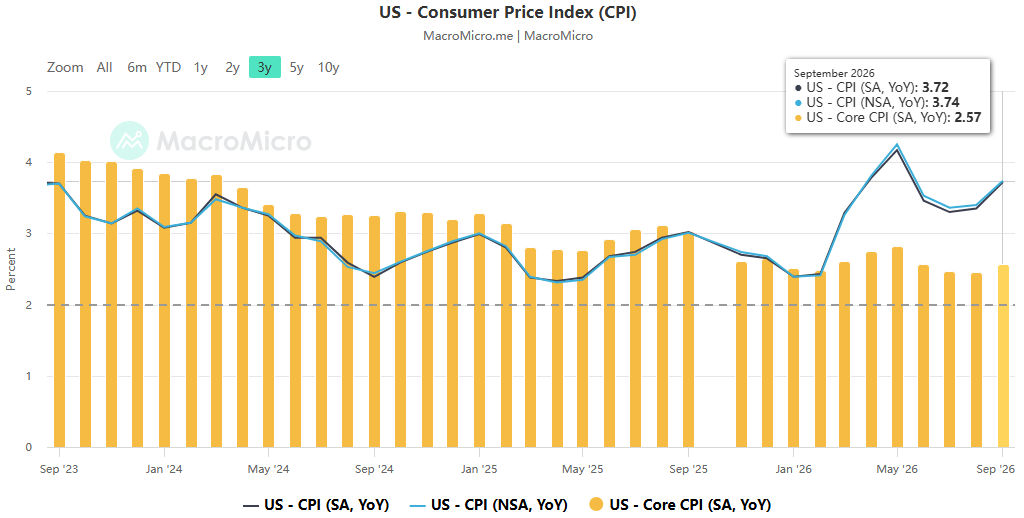
The overall CPI in October decreased by 0.4% quarter-on-quarter (compared to 0.6% in September), with the decline mainly driven by the energy component.
Core CPI rose 0.3% month-on-month, maintaining this growth rate for the third consecutive month, while the market had expected it to fall to 0.2%.
The core CPI, excluding food and energy, rose to an annualized rate of 3.7% over the three months ending in July, compared to just 1.6% over the same period last year.
Inflation Insights estimates that the core PCE in October may have increased by 0.34% month-on-month, or about 4% annualized, which is faster than the previous month.
ACE Markets points out that the significance of this data lies not in "exceeding expectations once again," but in its validation of officials' prior commitments: Waller publicly tied the condition of "0.3%, or 50 basis points," Logan advocated for at least another 50 basis points, with a pace faster than in the fall, and Schmid effectively maintained 3.75%-4%. When policy credibility is publicly tied to specific data thresholds, the margin for error is compressed to near zero—this is the real reason for the sudden escalation of the debate in December, not the fractional percentage points of the data itself. It should also be noted that the internal consensus is not monolithic: Paulson still favors gradual tightening, believing that it should only be accelerated when inflation transmits to wages or changes public inflation expectations, and that "we haven't seen that yet." Internal divisions are real, and this is the source of the next layer of misalignment.
The dispute concerns the "pathway design," not the "direction."
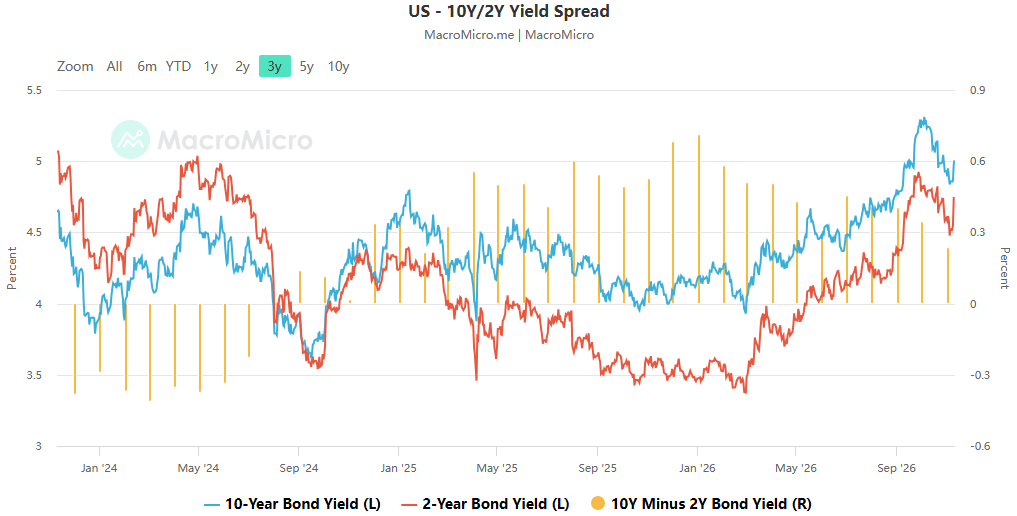
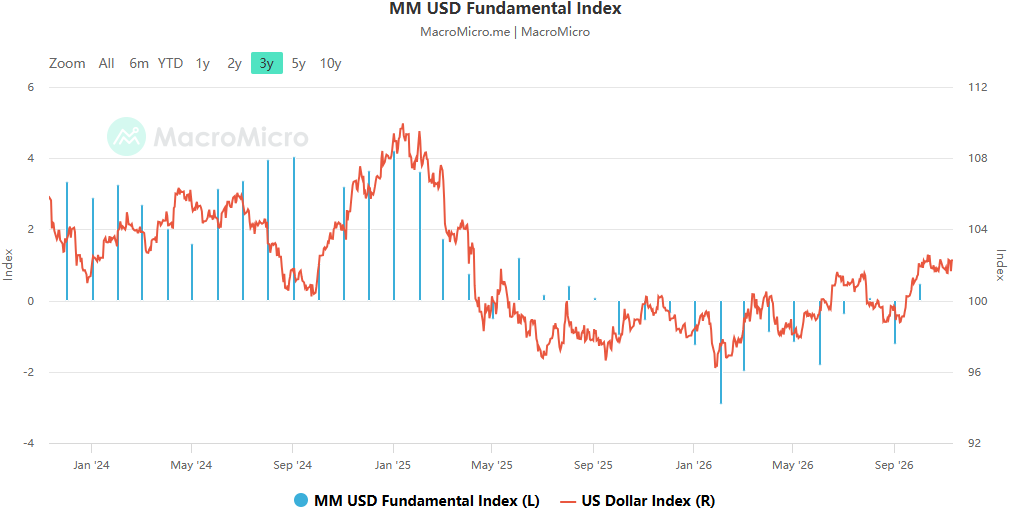
On the surface, the hawkish rhetoric of officials and the market reaction were synchronized: the two-year US Treasury yield rose 19 basis points to 4.75% in a single day, the largest single-day increase since April 2025, the US dollar strengthened against all major currencies, and the strong rebound in the bond market since the beginning of last month was reversed in one fell swoop. However, after juxtaposing the statements with futures pricing, ACE Markets discovered an easily overlooked gap: the market did not truly price in a "one-off 50 basis point" rate hike. Funds rate futures showed that the mainstream path was 25 basis points in December, another 25 basis points in January, and possibly another in April; the probability of 50 basis points once approached 15%, and then fell back to about 10%. Deutsche Bank's Luzetti also judged that three consecutive 25 basis point hikes, totaling 100 basis points (including the September hike), were more likely, because the Fed had just established a policy framework that sought to balance inflation control and avoid sharp market volatility, and a sudden, large rate hike would disrupt the existing arrangements.
This misalignment itself is the conclusion: hawkish statements from officials are pushing up short-term interest rates, but the market is betting on a "small steps, quick pace" rather than a "one-step" approach. The core reason for a single 50 basis point increase is to maintain credibility (Waller and Singh's claim of "being forced to accelerate due to lagging circumstances"), while the core reason for consecutive 25 basis point increases is to avoid disrupting the policy framework and the pace of market communication. The former determines the rate of interest rate acceleration, while the latter determines the final value of interest rates—their impacts on the curve shape, the dollar's pace, and risk assets are completely different and cannot be confused. This is why the consensus is that "at least 25 basis points are basically certain" (Polcelli), while "50 basis points" is still only a tail risk.
The shift from a "one-off shock" to a "widespread demand shock," and the formation of cross-textual evidence with the energy sector.
The two sets of data, from different perspectives, point to the same conclusion: price pressures have moved beyond "explainable" categories such as tariffs and energy.
Car insurance, public transportation, and medical services saw unexpected increases; sectors sensitive to transportation costs, such as housing and entertainment, also experienced pressure (Pimco Wilding).
Retail goods performed strongly even after Prime Day discounts; televisions and smartphones saw significant price increases due to rising costs of AI components.
Jeffrey Simmons calls it "whack-a-mole": when prices in one category ease, another category of previously pressured companies take the opportunity to raise prices.
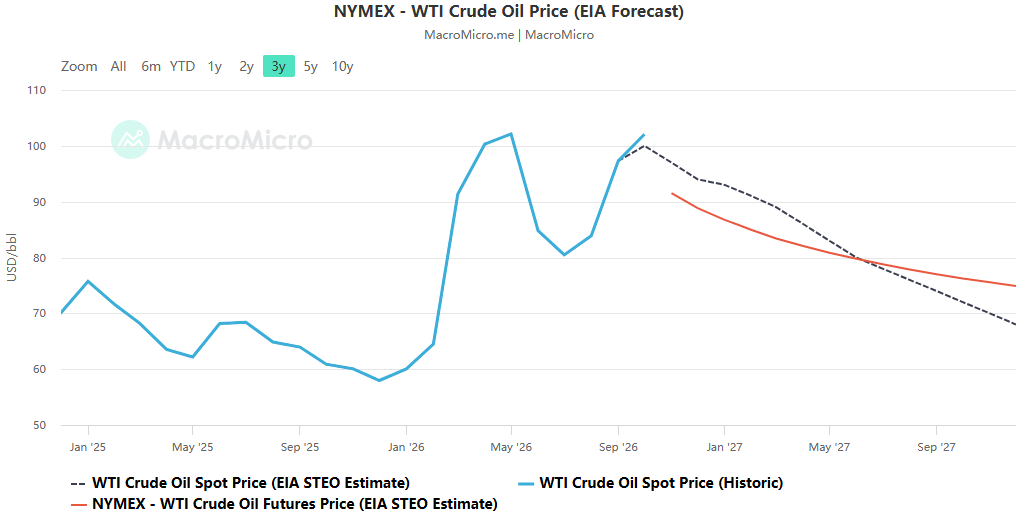
This presents a strong cross-material correlation, perfectly aligned with our previous analysis of the crude oil supply chain. While crude oil prices have recently fallen by over 20%, diesel prices, which briefly surpassed $6.50 per gallon in September, have remained around $6.10 this week. Waller's explanation hits the nail on the head: the recovery of energy supply depends not only on crude oil transportation but also on refining capacity, and global refinery facilities have been severely damaged and are unlikely to recover in the short term. This implies a blocked channel between the decline in upstream crude oil benchmark prices and the decline in end-user energy costs.
ACE Markets' previously repeated emphasis on the "transportation-refinery link creating a secondary inflation shock" is directly confirmed by official statements: even if oil prices continue to fall, inflation may not improve in tandem; the lagged transmission of energy prices to core inflation remains a source of upside risk. Similarly, logistical disruptions in the Hormuz and Red Sea directions will be reflected in refined oil and transportation service prices with a longer time lag. Waller further defines this phenomenon as a "broad demand shock" rather than temporary fluctuations in a few industries, specifically mentioning the demand pull generated by AI infrastructure construction—this links inflation to the AI capital cycle.
It's both a driver of inflation and a "hidden interest rate hike."
The two reports are most clearly complementary on the point about AI: one discusses how AI drives up the cost of electronic components, while the other discusses how the revaluation of AI returns will impact tech stocks and increase financing costs for related companies (as explicitly stated by Bowman). ACE Markets believes this is precisely the structural root of the Fed's dilemma—the same variable acting in two directions simultaneously:
Upside potential: AI infrastructure development drives demand, pushing up component and equipment prices and making inflation more widespread;
Downside: AI-driven valuation reassessment leads to stock price declines, increased financing costs, and a spontaneous tightening of financial conditions, partially replacing the function of policy-driven interest rate hikes.
Bowman's assessment therefore carries policy implications: given the already tightening financial environment, "the benefits of further tightening must be carefully weighed against the costs." In other words, last week's massive sell-off in tech stocks has already accomplished some of the tightening work for the Federal Reserve. This also explains why there is a consensus on "whether to raise interest rates," but a huge divergence on "how much to raise"—because with financial conditions already tightening spontaneously, the marginal necessity of raising interest rates has been weakened, while the marginal importance of public trust has been increased, both pointing to different choices regarding the magnitude of the increase.
Chairman Walsh, who took office this year, has rarely spoken publicly about how he will act in the face of such inflation data. Both reports indicate that investors need to make their own judgments: will he stick to the traditional gradual adjustment approach, or accept larger and faster tightening? ACE Markets suggests that the information gap from the new chairman will be directly priced into the risk premium by the market, manifesting as increased short-term volatility and instability at the front end of the yield curve. The key to the December 8-9 meeting may not be the 25 basis points themselves, but whether the post-meeting wording leaves clear room for a "continued rate hike in January"—the magnitude is the answer of this meeting, but the wording is the answer to the path over the next three months.
ACE Markets Scenario Simulation and Tracking Checklist
Baseline Scenario: A 25 basis point rate hike in December, followed by another 25 basis point hike in January, adopting a "small, continuous" approach rather than a "single, large-scale" hike, with wording leaving room for future action. Short-term interest rates fluctuate at high levels, the yield curve is relatively flat at the front end, and the US dollar is relatively flat but has an upward ceiling.
Upside risks: If inflation and employment overheat again in November, core PCE approaches 4%, and diesel and transportation service prices catch up, the tail probability of a 50 basis point increase will substantially rise, the two-year yield will challenge previous highs, the yield curve will flatten further, and the technology and high-valuation sectors will come under pressure.
Downside risks: AI-related credit spreads continue to widen, corporate financing conditions tighten further, employment weakens significantly, the Fed may slow the pace, short-term rates fall, and the steepening yield curve recovers.
We recommend prioritizing tracking five interrelated signals : the November CPI and employment report, the core PCE actual reading, diesel prices and global refinery utilization rates, credit spreads and capital expenditure guidance for AI-related companies, and Warsh's first explicit statement. This round of policy maneuvering can be summarized in one sentence: data validated the thresholds set by officials, officials' statements pushed up short-term interest rates, but the market chose a different path through futures pricing. Inflation has shifted from an explainable one-off shock to a widespread demand shock. AI is simultaneously playing the dual role of an inflation driver and a hidden tightener, thus compressing the Fed's margin for error in both directions.
The content of this article is spontaneously contributed by Internet users, and the views expressed in this article only represent the author himself. This website only provides information storage space services, does not own ownership, and does not assume relevant legal responsibilities.https://www.aneimedzi.cn/html/564.html